
Expert Picks for Concrete Leveling Equipment and Supplies
Find out which tools and materials professionals recommend for achieving smooth, level concrete surfaces with ease.
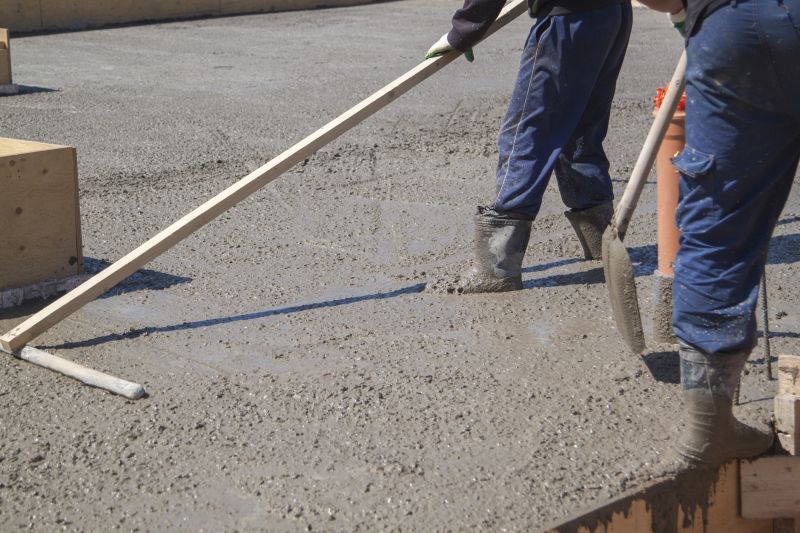 Concrete leveling is a crucial process for maintaining the safety, appearance, and functionality of various surfaces around residential and commercial properties. When concrete slabs settle, crack, or become uneven over time, it can pose safety hazards and diminish curb appeal. Fortunately, there are numerous products designed to address these issues effectively. These products range from self-leveling compounds and repair mixes to specialized tools that facilitate the lifting and stabilization of uneven slabs. Choosing the right product depends on the specific condition of the concrete, the size of the area needing correction, and the desired longevity of the repair.
Top Overall Option
Self-Leveling Concrete Compound
A versatile self-leveling concrete compound offers an easy-to-apply solution for smoothing and leveling uneven slabs. It is suitable for both minor repairs and larger surface corrections, providing a seamless finish when used correctly. This type of product typically features a fluid consistency that spreads evenly across the surface, filling in low spots and cracks without the need for extensive manual work. Its quick setting properties can help reduce downtime, making it a popular choice for residential and commercial projects alike.
Types of Products For Concrete Levelings
Self-Leveling Concrete Mix
Fluid formulations that spread evenly to create a smooth, level surface, ideal for floors and large slabs.
Concrete Patching Compound
Designed for filling cracks, holes, and minor surface imperfections in concrete slabs.
Polyurethane Foam Lifting Kits
Use expanding foam to lift and stabilize sunken slabs, suitable for uneven driveways and patios.
Hydraulic Cement
Heavy-duty repair material for stopping leaks and filling larger cracks or holes.
Polymer-Modified Mortar
Enhanced mortar mixes for patching and leveling that offer improved adhesion and durability.
Liquid Cement Patch
Pre-mixed liquid formulations for quick repairs on small surface areas.
Concrete Resurfacer
Thin overlays that restore the surface finish and improve the appearance of worn concrete.
Rapid-Set Repair Mortar
Fast-curing mortar suitable for urgent repairs and small to medium-sized leveling tasks.
Epoxy Concrete Repair
High-strength epoxy formulations for bonding and filling cracks or voids in concrete.
Polyurea Concrete Coating
Flexible coatings that can also serve as leveling layers for certain applications.
Popular Choices
Widely used for leveling interior floors, providing a smooth surface for flooring installation.
Commonly selected for filling and sealing cracks in driveways and walkways.
Trending for slab lifting projects due to ease of use and effectiveness.
Popular for fast repairs on small-scale surface imperfections.
Chosen for restoring worn or damaged concrete surfaces with a new finish.
Often used for sealing leaks and stabilizing structural concrete elements.
Favored for its smooth finish and compatibility with various flooring materials.
Ideal for urgent repairs requiring quick stabilization.
Popular for structural crack repairs and bonding applications.
Used for both leveling and protective coating applications.
In recent years, advancements in concrete leveling technology have introduced more user-friendly and efficient solutions. Many products are now formulated for easy application, allowing DIY enthusiasts and professionals alike to perform repairs with minimal hassle. Proper preparation, application, and curing are essential steps to ensure the best results. It is also important to select products compatible with the existing concrete type and environmental conditions of the job site.
Whether addressing small cracks or large uneven slabs, understanding the different types of leveling products can help you make an informed decision. Some products are designed for quick fixes, while others provide more durable, long-term solutions. Regular maintenance and timely intervention can prolong the lifespan of concrete surfaces, preventing costly replacements down the line. When selecting products, consider factors such as ease of use, drying time, and compatibility with other repair materials to achieve the most effective outcome.
Key Buying Considerations
- Determine the extent of the unevenness or damage to select an appropriate product type.
- Consider the size of the area needing repair to choose between small patching compounds or large-scale leveling solutions.
- Check the drying and curing times to coordinate project timelines effectively.
- Evaluate the ease of application, especially if planning a DIY project.
- Ensure compatibility with existing concrete or flooring materials for optimal adhesion.
- Review the product’s flexibility and strength to match the demands of the surface use.
- Assess whether the product is suitable for interior or exterior applications based on environmental exposure.
- Look into the product’s resistance to moisture, freeze-thaw cycles, and wear for durability.
- Consider whether the product requires special tools or equipment for application.
- Check for safety instructions and ventilation requirements during application.
- Review product labels for any specific surface preparation instructions.
- Identify if the product is suitable for large or small repairs to avoid under- or over-spending.
- Compare costs relative to the coverage area and expected longevity of the repair.
- Look for products with clear instructions and technical support options.